Mortgage Options for Retired Borrowers
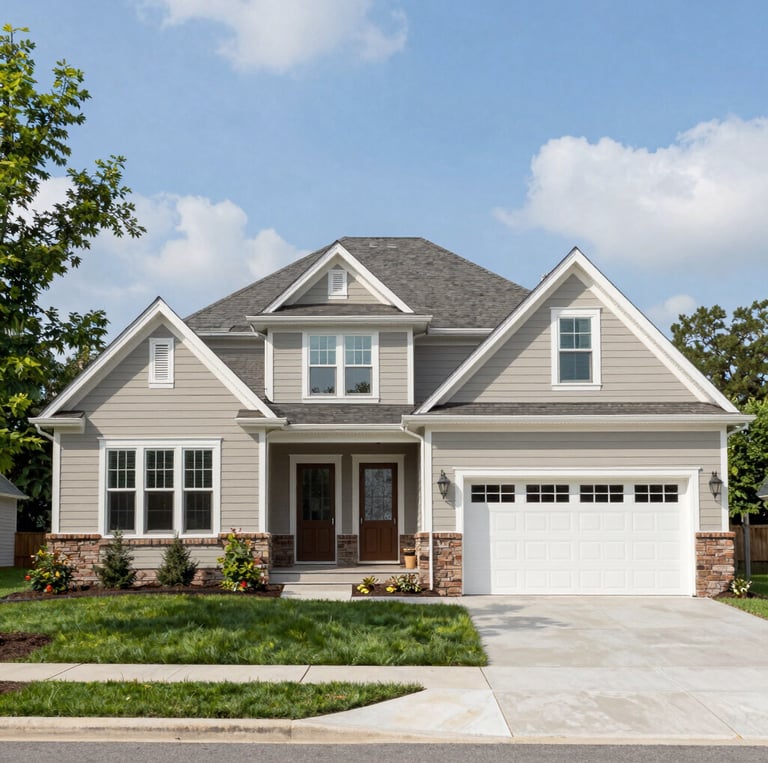
There are several options for retirees to get qualified for a mortgage including using retirement accounts or other assets for income qualifying.
Mortgage Solutions for Retirees With Strong Assets
Getting approved for a mortgage in retirement can feel frustrating when traditional income does not fully reflect your financial strength. Many retired borrowers have significant assets, savings, investment accounts, or retirement funds, but may show lower monthly income from Social Security, pensions, or retirement distributions.
If your income looks low on paper but you have strong assets, there may still be mortgage options available.
We help retired borrowers compare mortgage options based on:
Social Security income
Pension income
Retirement account distributions
Investment income
Bank and brokerage assets
Asset-based mortgage programs
Non-QM mortgage options
For homeowners interested in using home equity during retirement, we also provide a separate page explaining reverse mortgage options in more detail.
Why Mortgage Approval Can Be Different in Retirement
Traditional mortgage approval often focuses heavily on monthly qualifying income.
That can create challenges for retired borrowers who:
Have significant assets but lower monthly income
Do not take large retirement distributions
Have taxable income that appears low
Live off savings or investments strategically
Want to keep assets invested instead of increasing withdrawals
Have strong net worth but limited traditional income documentation
This does not mean you cannot qualify. It means the mortgage needs to be reviewed the right way.
We Start With Traditional Income First
The first step is usually to review whether you can qualify using standard income sources.
This may include:
Social Security income
Pension income
Retirement account distributions
IRA or 401(k) withdrawals
Investment income
Annuity income
Part-time employment income, if applicable
If traditional income supports the loan amount needed, a standard conventional mortgage may be the best option.
That is usually where we want to start.
When Traditional Retirement Income Is Too Low
Some retired borrowers have strong assets but intentionally keep monthly income low.
That can happen when:
Retirement withdrawals are minimized for tax planning
Investments are left to grow
Income is irregular
Distributions are taken only as needed
The borrower has high assets but lower documented income
In these cases, standard mortgage guidelines may not fully capture the borrower’s ability to repay.
That is where alternative mortgage options may help.
Asset-Based Mortgage Options
Asset-based mortgage options may allow certain borrowers to qualify using eligible assets instead of relying only on traditional monthly income.
Depending on the loan program, assets may be reviewed from accounts such as:
Checking accounts
Savings accounts
Brokerage accounts
Retirement accounts
Investment accounts
Other eligible liquid assets
The goal is to evaluate the borrower’s broader financial strength when traditional income alone does not support the loan amount needed.
Asset Depletion or Asset Utilization
Some loan programs may use an asset depletion or asset utilization calculation.
This means eligible assets may be converted into a qualifying income figure for mortgage approval purposes. The calculation varies by lender and program, so the same borrower may qualify differently depending on the loan option.
This can be useful for retired borrowers who have strong assets but do not show enough traditional monthly income.
Non-QM Mortgage Options for Retired Borrowers
Non-QM mortgage programs may provide more flexible ways to evaluate income and assets.
For retired borrowers, these programs may help when:
Social Security or pension income is not enough
Retirement distributions are limited
The borrower has strong assets
Tax returns do not show enough income
Conventional mortgage approval does not produce the needed loan amount
Non-QM does not automatically mean better. It means more flexible. The right option depends on the full scenario, including loan amount, down payment, credit, reserves, property type, and long-term goals.
No-Income or Asset-Based Loan Options
In some cases, borrowers may qualify through programs that do not require traditional income documentation.
These options are usually more conservative and may require:
Stronger credit
Larger down payment
Meaningful reserves
Strong asset documentation
Acceptable property type and occupancy
Full underwriting review
These programs are not for everyone, but they can be useful for borrowers whose assets are strong but traditional income documentation is limited.
Reverse Mortgage Options
For some eligible homeowners, a reverse mortgage may also be worth reviewing as part of a retirement mortgage strategy. A reverse mortgage is a separate loan option that may allow qualified homeowners to access home equity without a required monthly mortgage payment.
Because reverse mortgages have unique rules, benefits, costs, and eligibility requirements, we cover them in more detail on our dedicated reverse mortgage page.
[Learn More About Reverse Mortgages]
Why a Full Financial Review Matters
Every lender and program may calculate income and assets differently.
That is especially true for retired borrowers because the file may include:
Social Security
Pension income
IRA or 401(k) distributions
Required minimum distributions
Brokerage accounts
Annuities
Trust income
Investment income
Cash reserves
Real estate assets
The best way to determine the right mortgage option is to review the full financial picture.
Best First Step
The best place to start is with a complete review of your financial scenario.
We recommend:
Completing a mortgage application
Completing a soft credit pull
Providing recent asset statements
Providing retirement income documentation
Providing Social Security or pension award letters, if applicable
Providing recent tax returns, if needed
Reviewing your goals for the property and loan
This allows us to first determine whether a standard mortgage option works. If not, we can compare asset-based and non-QM mortgage options.
Who These Mortgage Options May Help
These options may be helpful for borrowers who:
Are retired or nearing retirement
Have significant assets
Show lower monthly income
Want to preserve investments
Do not want to increase taxable distributions just to qualify
Have Social Security or pension income that is not enough by itself
Want to buy a home, refinance, or access equity
Need a mortgage strategy based on the full financial picture
Retiree Mortgage FAQs
Can retired borrowers get a mortgage?
Yes. Retired borrowers can qualify for a mortgage if they meet the applicable loan program requirements. Income, assets, credit, property type, and overall financial strength are all reviewed.
What if my Social Security income is not enough to qualify?
If Social Security income alone is not enough, other income sources or asset-based mortgage options may be reviewed.
Can assets help me qualify for a mortgage?
Yes. Some programs may allow eligible assets to be used as part of the qualification process.
What is asset depletion?
Asset depletion is a method some lenders use to convert eligible assets into qualifying income for mortgage approval.
What if I have a lot of money in retirement accounts but low monthly income?
You may have options. Some programs consider retirement assets, distributions, or alternative asset calculations, depending on the lender and loan type.
Do I have to withdraw more money from retirement accounts to qualify?
Not always. Some programs may use eligible assets without requiring the borrower to increase monthly withdrawals, depending on the guidelines.
Are non-QM loans available for retired borrowers?
Yes. Non-QM mortgage options may help borrowers who have strong assets but do not qualify under traditional income guidelines.
Is a reverse mortgage the same as an asset-based loan?
No. A reverse mortgage is a separate type of loan with its own rules, eligibility requirements, costs, and benefits. We explain reverse mortgage options in more detail on our dedicated reverse mortgage page.
What documents should I provide?
A good starting point includes asset statements, retirement income documentation, Social Security or pension documents, tax returns if applicable, and a completed mortgage application.
Contact
Armstrong Mortgage LLC – NMLS #2444347 Equal Housing Opportunity
Phone - Call or Text
michael@armstrongmtg.com
463-218-7843
317-362-6346
© 2025. All rights reserved.
Michael Armstrong – NMLS #1623098
Important Disclosures
Program guidelines, rates, terms, and availability are subject to change without notice. All loans are subject to credit approval, underwriting review, property eligibility, collateral review, title review, and applicable program guidelines. Stated guidelines are not a commitment to lend. Meeting minimum credit score, down payment, reserve, acreage, and loan amount requirements does not guarantee approval. Rates are subject to market conditions and borrower qualifications. Call for current rate information based on your specific loan scenario. Additional restrictions may apply.